What is gut health?
Currently, there is no recognised definition of what gut health actually means, but we can assume that it includes the following:
- Effective digestion & absorption of food
- Stable gut microbiota
- Functioning immune system
- State of wellbeing or digestive comfort
As a gut health dietitian who specialises in working with people with that need digestive support , I spend most of my time helping people get to a place of digestive comfort. Also, if someone is experiencing a state of well-being (feeling well each day), we can assume that they are also experiencing the other positive digestive health criteria.
What does a healthy gut look like?
This is a tricky question. Stool sample analysis is becoming popular on the internet as people try to understand their gut better. This is when you send a tablespoon of your number 2’s off with a few hundred dollars and get a nice colourful print out of what your microbiome looks like. However, it’s important to note that there is still no gold standard of what a healthy gut microbiome should look like to compare your sample to. Not only is your microbiome more individual than your fingerprints, it also changes day to day depending on what you eat, what medication or supplements you take, what exercise you do, the season, your stress levels and more. What we do know about a healthy microbiome is that a diverse and abundant array of bacteria is a good thing i.e. the more bacteria and the more different kinds of bacteria you have, the better.
How to achieve a healthy gut
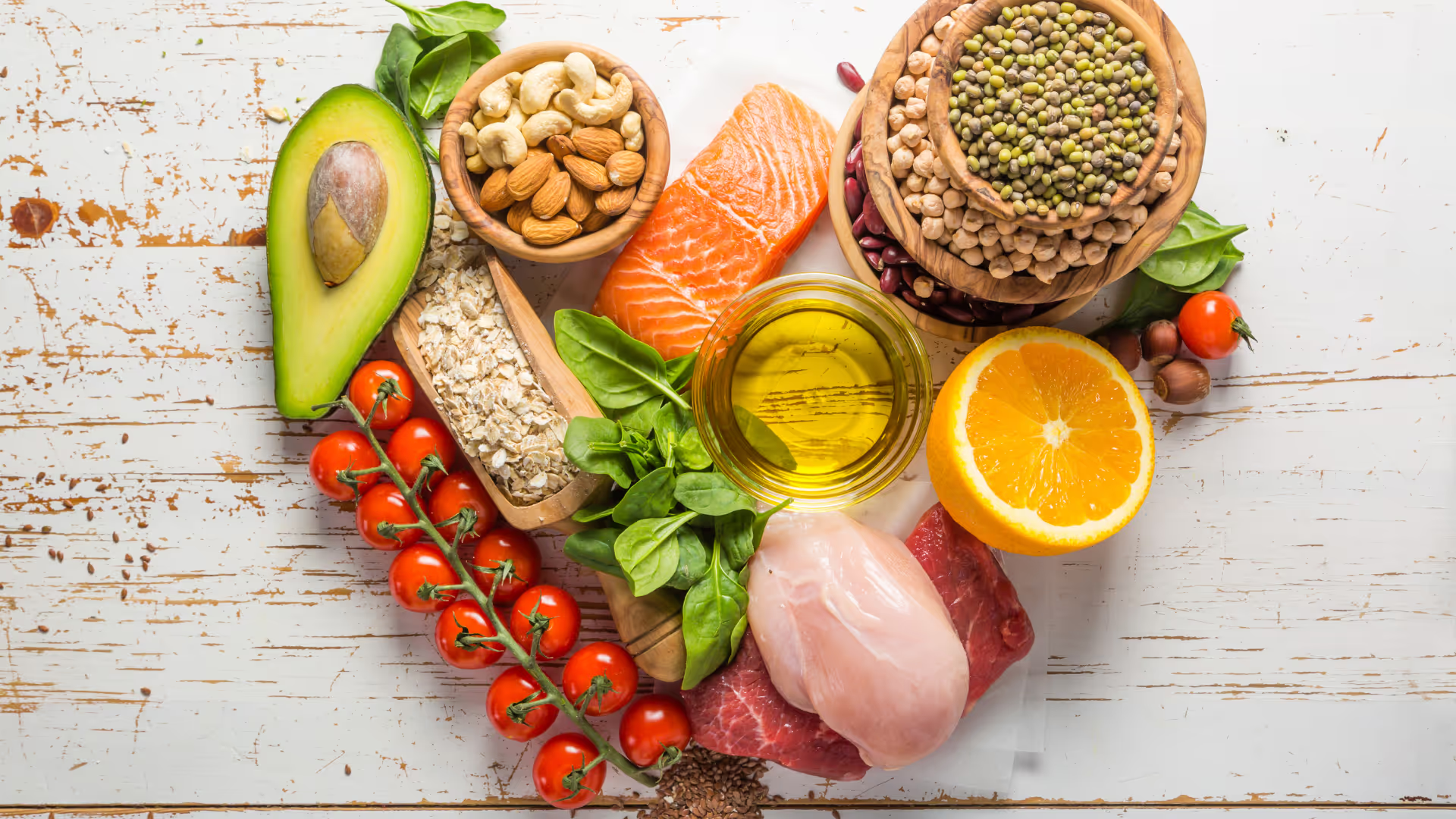
When it comes to microbiome, the more diversity and abundance of bacteria you have the better. We know from The American Gut Project that people who eat 30 or more plant foods in a week have a much more abundant and diverse microbiome than those who eat 10 or less per week. In a nutshell, the more abundant and diverse in plant foods your diet is, the more abundant and diverse your gut microbiome is.
What about Probiotics?
Probiotics are often talked about when it comes to gut health, but what are they, do you need them and if so, which one should you take?
Probiotics are defined by the World Health Organisation as:
“live microorganisms which when administered in adequate amounts confer a health benefit on the host”.
Probiotics can certainly add to the diversity and abundance of your microbiome as well as promoting the growth of live microorganisms and producing beneficial compounds. All things that may restore and promote digestive health.
How to choose a probiotic?
When it comes to probiotics, there are a multitude of options – some are backed by research and others are not. Choosing the right probiotic for you is the most important part and we have a checklist to help.
Probiotic checklist:
- Health benefit: Start by defining your primary health concern or required benefit that needs addressing. Is it general gut health, bloating, improving bowel movements or mental health?
- Strain & evidence: Strain is absolutely key. Different probiotic strains will provide different health benefits and have different levels of research backing them. You want to choose the strain that has evidence to address your health concern. It’s good to know that BC30TM is a probiotic with a robust safety record and over 25 published clinical studies, including research that shows it can help support, promote and restore digestive health.
- Mode of delivery: You want to choose a probiotic that survives digestion and reaches your microbiome so the probiotics can do their thing. BC30 is a spore-forming probiotic, meaning it has a natural, protective outer layer that helps to preserve shelf life, protect it from damage during manufacturing and ensure it survives digestion.
- Dose: The research outlines how much of the probiotic strain (i.e. CFU) needs to be consumed to deliver the health outcome.
- Timing: Research suggests that probiotics included as part of a food or beverage can be just as effective as those taken as a supplement. BC30 is a spore-forming probiotic that is well-suited to be added to food or beverage products as a functional Taking it is as simple as a cup of probiotic tea in the morning or a probiotic muesli bar for your mid-afternoon snack.
- Consume the probiotic daily: Probiotics can take up to 4 weeks to be effective, so don’t give up before that. Also, to continue to achieve the health benefit, you should keep taking the probiotic daily.
Does your Probiotic need to be taken in pill form?
This one is easy, absolutely not! As a dietitian I have a food first philosophy. The less pills and powders you need to take the better. If you can get your probiotics from food, that’s ideal and, it tastes better too! This is one of the reasons I love BC30. BC30 is not a pill. It’s a probiotic that is designed to be added as a functional ingredient to foods during processing. This makes taking it as easy as a bowl of muesli at breakfast, a probiotic snack bar on the go, or a cup of probiotic tea after dinner.
Of course, although BC30 helps to restore and promote digestive health, it is not a replacement for a healthy and balanced diet, so make sure to get your 30 different plant foods a week from fruits, vegetables, whole grains, legumes, nuts and seeds.
Where to find out more about BC30
BC30, formerly known as GanedenBC30, can be found in a number of food and beverage products across Australia today. Look for the BC30 logo and brand name on product packages or check the ingredients list for the unique strain name of Bacillus coagulans GBI-30, 6086. You can find out more about BC30 including the science behind it here.